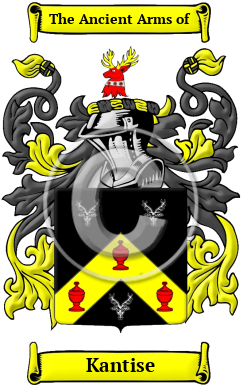
Kantise is a name of ancient Anglo-Saxon origin and comes from the family once having lived in the village of Kentish, where they held land. The surname Kantise was a local name for a person from Kent
Loading...
Early Origins of the Kantise family
The surname Kantise was first found in Suffolk, where they held a family seat from ancient times.
Early History of the Kantise family
This web page shows only a small excerpt of our Kantise research. Another 199 words (14 lines of text) covering the years 1165, 1176, 1208, 1500 and 1722 are included under the topic Early Kantise History in all our PDF Extended History products and printed products wherever possible.
Kantise Spelling Variations
Sound was what guided spelling in the essentially pre-literate Middle Ages, so one person's name was often recorded under several variations during a single lifetime. Also, before the advent of the printing press and the first dictionaries, the English language was not standardized. Therefore, spelling variations were common, even among the names of the most literate people. Known variations of the Kantise family name include Cantis, Cantiss, Cantisse, Centeis, Kenteis, Kantisse, Canteis and many more.
Early Notables of the Kantise family
More information is included under the topic Early Kantise Notables in all our PDF Extended History products and printed products wherever possible.
Loading...
Loading...
Loading...
Loading...
Migration of the Kantise family
For political, religious, and economic reasons, thousands of English families boarded ships for Ireland, Canada, the America colonies, and many of smaller tropical colonies in the hope of finding better lives abroad. Although the passage on the cramped, dank ships caused many to arrive in the New World diseased and starving, those families that survived the trip often went on to make valuable contributions to those new societies to which they arrived. Early immigrants bearing the Kantise surname or a spelling variation of the name include: Timothy Cantis, who came to Indiana in 1850.