
What is a Family Seat? Understanding its Role in Surnames
In medieval Europe, a family seat referred to the principal residence or manor of a noble family, often an elegant country mansion. This estate symbolized the family's political and economic power in the local community. The family seat was not just a home but a reflection of the family's prominence, and in many cases, it became the family's namesake.
For instance, the House of Windsor, the royal family of the United Kingdom, derives its name from Windsor Castle, a well-known family seat.
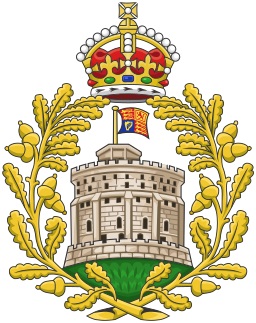
The Historical Role of Family Seats
The concept of a family seat dates back to the 11th century, appearing in the Domesday Book (a record commissioned by William the Conqueror). In this text, the term used was caput, meaning "head" or "top", symbolizing the central position of the manor in the family's estate and influence. Over time, this idea became integral to the social structure, and the term family seat is still used today in the British Isles and beyond.
Clan Seats: A Scottish Tradition
While the concept of a family seat is found across many cultures, the Clan seat specifically refers to the chief's residence in a Scottish Clan. These Clan seats, often fortresses or large estates, were important centers of both political power and social identity for Scottish families, particularly in the Highlands. The chief's seat often had significant symbolic value, reinforcing the clan's unity and heritage.
FAQs
How do family seats relate to surnames?
Family seats sometimes give rise to surnames, with noble families taking the name of their family seat as part of their formal identity. For example, the House of Habsburg took its name from Habsburg Castle in present-day Switzerland, which served as the family's principal seat.
Did every surname historically have a single family seat?
No, many surnames never had a single recognized family seat. A surname could arise independently in different regions, meaning several separate households might share the same name without sharing an ancestral manor or estate.
Can a family seat change over time?
Yes, as families gained or lost land, married into other estates, or relocated for political or economic reasons, their principal residence often changed. Some noble houses had multiple seats across generations, each reflecting a different chapter of their history.
References
- ^ "File:Badge of the House of Windsor (1938-1952).svg." Wikimedia Commons, the free media repository. 29 Oct 2019, 06:11 UTC. https://commons.wikimedia.org/w/index.php?title=File:Badge_of_the_House_of_Windsor_(1938-1952).svg&oldid=372403142
- ^ Swyrich, Archive materials
- Thompson, J. (1991). The Medieval Manor: Structure and Social Role. Oxford University Press.
- Brown, R. (2004). Scottish Clans and Their Seats. Edinburgh University Press.
- “The Domesday Book: A History.” British History Online, www.british-history.ac.uk/domesday-book.
.svg&oldid=372403142)