
Show ContentsCaunce History, Family Crest & Coats of Arms

Etymology of Caunce

What does the name Caunce mean?

The ancestors of the Caunce family come from the ancient Scottish kingdom of Dalriada. The family name comes from the personal name Naos, which is a dialectal form of Aonghus or Angus. The Gaelic form of the name is Mac Neis, which is derived from the earlier form Mac Naois; both of these mean son of Angus. Thus, the name Caunce is a cognate of MacAngus and MacInnes.

Early Origins of the Caunce family

The surname Caunce was first found in Perthshire (Gaelic: Siorrachd Pheairt) former county in the present day Council Area of Perth and Kinross, located in central Scotland, where they held a family seat from early times and their first records appeared on the early census rolls taken by the early Kings of Britain to determine the rate of taxation of their subjects.

Early History of the Caunce family

This web page shows only a small excerpt of our Caunce research. Another 103 words (7 lines of text) covering the years 1522 and 1890 are included under the topic Early Caunce History in all our PDF Extended History products and printed products wherever possible.

Caunce Spelling Variations

Historical recordings of the name Caunce include many spelling variations. They are the result of repeated translations of the name from Gaelic to English and inconsistencies in spelling rules. They include MacNeish, MacNeice, MacNish, MacNess, MacKness, MacNeece and many more.

Early Notables of the Caunce family

More information is included under the topic Early Caunce Notables in all our PDF Extended History products and printed products wherever possible.

Migration of the Caunce family to Ireland

Some of the Caunce family moved to Ireland, but this topic is not covered in this excerpt.
Another 67 words (5 lines of text) about their life in Ireland is included in all our PDF Extended History products and printed products wherever possible.

Migration of the Caunce family

Dalriadan families proliferated in North America. Their descendants still populate many communities in the eastern parts of both the United States and Canada. Some settled in Canada as United Empire Loyalists, in the wake of the American War of Independence. Families on both sides of the border have recovered much of their heritage in the 20th century through Clan societies and highland games. Analysis of immigration records indicates that some of the first North American immigrants bore the name Caunce or a variant listed above: Thomas McNeish, who settled in Philadelphia in 1868; Michael McNish settled in Philadelphia in 1866.


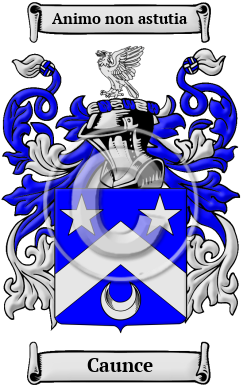
The Caunce Motto +

The motto was originally a war cry or slogan. Mottoes first began to be shown with arms in the 14th and 15th centuries, but were not in general use until the 17th century. Thus the oldest coats of arms generally do not include a motto. Mottoes seldom form part of the grant of arms: Under most heraldic authorities, a motto is an optional component of the coat of arms, and can be added to or changed at will; many families have chosen not to display a motto.

Motto: Animo non astutia
Motto Translation: By courage, not by craft.


Houseofnames.com on Facebook