
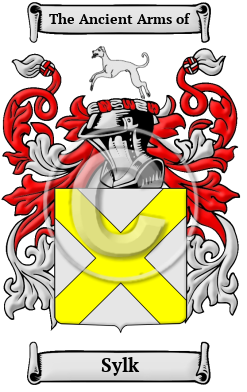
Show ContentsSylk History, Family Crest & Coats of Arms

Etymology of Sylk

What does the name Sylk mean?

Sylk is a name that dates far back into the mists of early British history to the days of the Anglo-Saxon tribes. It is derived from the baptismal name for the son of Cecil, deriving from the nickname Sill. After the Norman Conquest, the Old English naming system gradually dissolved. Old English names became less common and were replaced by popular continental European names. The earliest surnames in England were found shortly after the Norman Conquest and are of Norman French rather than native English origins.

Early Origins of the Sylk family

The surname Sylk was first found in Derbyshire where they held a family seat from early times and were anciently descended from the distinguished Saxon family who held a family seat there well before the Norman Conquest. The name is derived from a colloquial term in Derbyshire about the year 1000 describing a thrush, i.e. a "shrilcock" or "shilcock."

Early History of the Sylk family

This web page shows only a small excerpt of our Sylk research. Another 111 words (8 lines of text) covering the years 1200, 1283, 1379 and 1781 are included under the topic Early Sylk History in all our PDF Extended History products and printed products wherever possible.

Sylk Spelling Variations

It is only in the last few hundred years that the English language has been standardized. For that reason, early Anglo-Saxon surnames like Sylk are characterized by many spelling variations. As the English language changed and incorporated elements of other European languages, even literate people changed the spelling of their names. The variations of the name Sylk include: Silcock, Silcocks, Silcox, Sylcox, Sylcock, Shilcock, Shrilcox, Shrilcocks, Silk and many more.

Early Notables of the Sylk family

More information is included under the topic Early Sylk Notables in all our PDF Extended History products and printed products wherever possible.

Migration of the Sylk family

Many English families tired of political and religious strife left Britain for the new colonies in North America. Although the trip itself offered no relief - conditions on the ships were extremely cramped, and many travelers arrived diseased, starving, and destitute - these immigrants believed the opportunities that awaited them were worth the risks. Once in the colonies, many of the families did indeed prosper and, in turn, made significant contributions to the culture and economies of the growing colonies. An inquiry into the early roots of North American families has revealed a number of immigrants bearing the name Sylk or a variant listed above: Ann Silcock who landed in America in 1748; William Silcock settled in Virginia in 1729; Roger Silcocke settled in America in 1660; Grace Silcockes settled in Virginia in 1670.


Houseofnames.com on Facebook
