
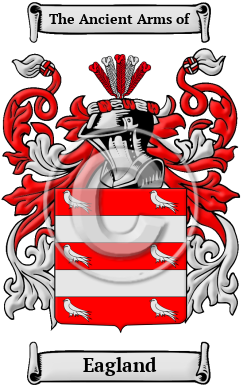
Show ContentsEagland History, Family Crest & Coats of Arms

Etymology of Eagland

What does the name Eagland mean?

The Eagland surname is thought to come from the Norman female personal name, Agilina, originally of Germanic origin.

Early Origins of the Eagland family

The surname Eagland was first found in Bedfordshire (Old English: Bedanfordscir), located in Southeast-central England, formerly part of the Anglo-Saxon kingdom of Mercia, where they held a family seat as Lords of the Manor. The Saxon influence of English history diminished after the Battle of Hastings in 1066. The language of the courts was French for the next three centuries and the Norman ambience prevailed. But Saxon surnames survived and the family name was first referenced in the 13th century when they held estates in that shire.

Early History of the Eagland family

This web page shows only a small excerpt of our Eagland research. Another 79 words (6 lines of text) covering the years 1327, 1455 and 1487 are included under the topic Early Eagland History in all our PDF Extended History products and printed products wherever possible.

Eagland Spelling Variations

It is only in the last few hundred years that the English language has been standardized. For that reason, early Anglo-Saxon surnames like Eagland are characterized by many spelling variations. As the English language changed and incorporated elements of other European languages, even literate people changed the spelling of their names. Scribes and monks in the Middle Ages spelled names they sounded, so it is common to find several variations that refer to a single person. The variations of the name Eagland include: Eglin, Eglon, Egling, Eggling, Egland, Eglen, Eagland, Eaglin, Eaglon, Hegland, Heglin, Heglen, Hegling, Egolyn and many more.

Early Notables of the Eagland family

More information is included under the topic Early Eagland Notables in all our PDF Extended History products and printed products wherever possible.


Eagland migration to New Zealand +

Emigration to New Zealand followed in the footsteps of the European explorers, such as Captain Cook (1769-70): first came sealers, whalers, missionaries, and traders. By 1838, the British New Zealand Company had begun buying land from the Maori tribes, and selling it to settlers, and, after the Treaty of Waitangi in 1840, many British families set out on the arduous six month journey from Britain to Aotearoa to start a new life. Early immigrants include:

Eagland Settlers in New Zealand in the 19th Century
  • Charles Eagland, who arrived in Auckland, New Zealand aboard the ship "Westminster" in 1843


Houseofnames.com on Facebook
