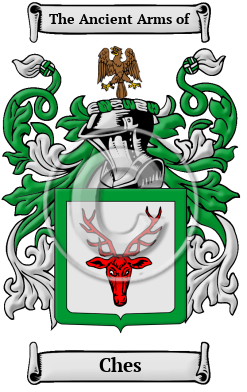
The Anglo-Saxon name Ches comes from when the family resided in the market-town and parish of Chesham, which is located three miles from Amersham in the county of Buckinghamshire. This territory was recorded in the Domesday Book of 1086 as the site of four mills on lands owned by the Bishop of Bayeux and Hugh de Bolbec. The surname Ches belongs to the large category of Anglo-Saxonhabitation names, which are derived from pre-existing names for towns, villages, parishes, or farmsteads.
This web page shows only a small excerpt of our Ches research. Another 163 words (12 lines of text) covering the years 1086, 1200, 1297, 1525, 1650, 1728, 1754 and 1804 are included under the topic Early Ches History in all our PDF Extended History products and printed products wherever possible.
Ches Spelling Variations
The English language only became standardized in the last few centuries; therefore,spelling variations are common among early Anglo-Saxon names. As the form of the English language changed, even the spelling of literate people's names evolved. Ches has been recorded under many different variations, including Chessum, Chesson, Chessam, Chesham, Cestresham and others.
Early Notables of the Ches family
William de Chesham, a prominent 13th century landowner, Lord of the Manor of Chesham
Loading...
Loading...
Loading...
Loading...
Migration of the Ches family
For many English families, the political and religious disarray that shrouded England made the far away New World an attractive prospect. On cramped disease-ridden ships, thousands migrated to those British colonies that would eventually become Canada and the United States. Those hardy settlers that survived the journey often went on to make important contributions to the emerging nations in which they landed. Analysis of immigration records indicates that some of the first North American immigrants bore the name Ches or a variant listed above: Jeanne Chesson who sailed to Canada in 1638.