| ![Show Contents]() Lelant History, Family Crest & Coats of Arms Lelant History, Family Crest & Coats of Arms
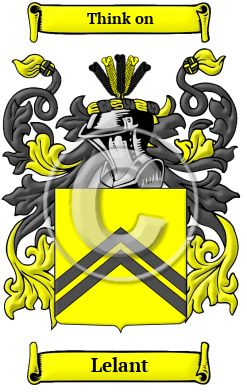
Etymology of LelantWhat does the name Lelant mean? The roots of the Lelant family stretch back to the Strathclyde people of the Scottish/English Borderlands, who were the first to use the surname. It is derived from the son of the servant of Fillan. Fillan is derived from the word fail which means wolf. In Gaelic, the name was spelled Mac Gill Fhaolain Lelant Coat of Arms CreationThere is a Maclellan Castle in Kirkcudbright, and the Maclellans, once a numerous clan in Galloway, held it for long. The Irish, or at least Saracens or gipsies 'from Ireland, made incursions into their territory, and were so troublesome that the people had to ask the aid of King James II., who promised the estate of Bombie to the man who slew the formidable leader of the marauding band. Young Maclellan got to know how fond this leader was of strong drink, and arranged that on their next coming his men should flee before them, lead the pursuers over a dry area beyond which was a well, which he carefully filled with spirits. The leader, thirsty after the chase, reached it, tasted, drank his fill, and, while thus drugged, was slain by young Maclellan, who took for his crest a Moor's head on the point of a sword. When he went to claim the estate the King said he could remember no such promise, but was told to " Think on," which became the motto of the Maclellans. 1 Early Origins of the Lelant familyThe surname Lelant was first found in the former counties of Kirkcudbrightshire and Galloway where Chief Duncan MacLellan appears in a charter of Alexander II in 1217. Other early records of the surname include Gilbert M'Lolane, who lived around the year 1270. Gilbert's son Patrick, along with several others, took the castle of Dumfries from the supporters of Robert the Bruce in around 1305. Gilelbertus MacLelan was elected Bishop of Man and the Sudreys in 1325 and held the position for almost 3 years. Early History of the Lelant familyThis web page shows only a small excerpt of our Lelant research. Another 201 words (14 lines of text) covering the years 1347, 1450, 1457, 1466, 1513, 1547, 1597, 1633, 1641, 1647 and 1890 are included under the topic Early Lelant History in all our PDF Extended History products and printed products wherever possible. Lelant Spelling VariationsThe variation in the spelling of Medieval names is a result of the lack of spelling rules in the English language prior to the last few hundred years. Before that time, scribes spelled according to sound, often varying the spelling of name within a single document. Lelant has appeared as MacClelland, McClellan, MacLellan, McLellan, MacLelland, McLelland, MacClelland, McClelland, Clelland and many more. Early Notables of the Lelant familySir William Maclellan of Bombie, knighted by King James IV of Scotland, who fought for the king in the losing Battle of Flodden Field in 1513. According to folklore, McLellan threw his gauntlet at the king's feet, shook his fist and beseeched the king to "Think on!", whereupon King James relented and awarded...
Another 53 words (4 lines of text) are included under the topic Early Lelant Notables in all our PDF Extended History products and printed products wherever possible. Migration of the Lelant family to IrelandSome of the Lelant family moved to Ireland, but this topic is not covered in this excerpt.
Another 97 words (7 lines of text) about their life in Ireland is included in all our PDF Extended History products and printed products wherever possible. Migration of the Lelant familyAs the persecution of Clan families continued, they sailed for North America in increasing numbers. In most cases, they found the freedom and opportunity they sought. Land was often available and the American War of Independence allowed Scots an opportunity to solidify their independence from the English crown. These settlers and their ancestors went on to play essential roles in the forging of the nations of the United States and Canada. Among them: Andrew McLellan, banished to New Jersey in 1685; Archibald Maclellan, who arrived in New York in 1790; Donald Maclellan, a "prisoner of the '45'.
The motto was originally a war cry or slogan. Mottoes first began to be shown with arms in the 14th and 15th centuries, but were not in general use until the 17th century. Thus the oldest coats of arms generally do not include a motto. Mottoes seldom form part of the grant of arms: Under most heraldic authorities, a motto is an optional component of the coat of arms, and can be added to or changed at will; many families have chosen not to display a motto.
Motto: Think on
- Polson, Alexander, The Romance of Scottish Crests and Mottoes. Inverness: Walter Alexander, Inglis Street 1929. Print
 |