
Show ContentsFausse History, Family Crest & Coats of Arms

Etymology of Fausse

What does the name Fausse mean?

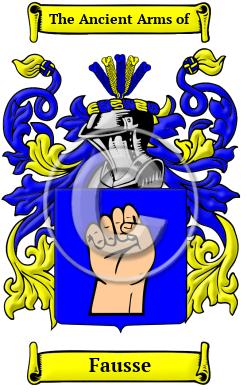
The German province known as the Rhineland is the ancestral home of the Fausse family. The German people originally used only one name, but as the population grew there was often confusion between people of the same name. This required people to adopt hereditary surnames. Many people took surnames based on nicknames - sometimes known as eke-names - that described certain personal characteristics. Fausse is a name for a person who was strong and pugnacious and was derived from the Old German word "fust," which meant "fist."

Early Origins of the Fausse family

The surname Fausse was first found in Strasbourg, where the name was closely identified in early mediaeval times with the feudal society which would become prominent throughout European history. The name would later emerge as a noble family in Bavaria and in the Rhine region with great influence, having many distinguished branches, and become noted for its involvement in social, economic and political affairs.

Early History of the Fausse family

This web page shows only a small excerpt of our Fausse research. Another 136 words (10 lines of text) covering the years 1480, 1540 and 1700 are included under the topic Early Fausse History in all our PDF Extended History products and printed products wherever possible.

Fausse Spelling Variations

Many cultural groups lived in the German states in medieval times. Each had its own dialect and traditions, and unique variations of popular names. Low German, which is similar to contemporary Dutch, was spoken in Westphalia. German names are characterized by additions such as regional suffixes and phrases that tell something about the origin or background of its original bearer. Further contributing to the variation in German names was the fact that there were no spelling rules in medieval times: scribes recorded names according to their sound. The recorded spelling variations of Fausse include Faust, Fauste, Fausst, Fausste, Fauss, Fausse and others.

Early Notables of the Fausse family

Another 37 words (3 lines of text) are included under the topic Early Fausse Notables in all our PDF Extended History products and printed products wherever possible.


Fausse migration to Canada +

Between the 17th and 20th centuries, hundreds of thousands of Europeans came to North America, and many Rhinelanders were among them. They had many various reasons for making the choice: to escape poverty and persecution, for adventure, and for the opportunity to own their own land. Ellis Island, one of the main American immigration centers, saw many settlers as they moved on to the states of Pennsylvania, Ohio, Texas, Illinois, California, and New York. In Canada, they found homes in Ontario, and on the great plains of the Midwestern provinces. The Fausse were among of the early German families that came to North America:

Fausse Settlers in Canada in the 18th Century
  • Toussaint Fausse, aged 24, who landed in Canada in 1714


Houseofnames.com on Facebook
