
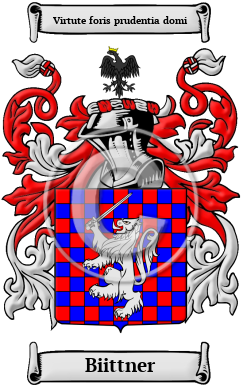
Show ContentsBiittner History, Family Crest & Coats of Arms

Etymology of Biittner

What does the name Biittner mean?

The surname Biittner was an occupational name for a cooper or a barrel maker. The name was derived from the Old German word "bute," which means "cask."

Early Origins of the Biittner family

The surname Biittner was first found in Bohemia, where the family came from humble beginnings but gained a significant reputation for its contribution to the emerging mediaeval society. It later became more prominent as many branches of the same house acquired distant estates and branches, some in foreign countries, always elevating their social status by their great contributions to society.

Early History of the Biittner family

This web page shows only a small excerpt of our Biittner research. Another 138 words (10 lines of text) covering the years 1773 and 1804 are included under the topic Early Biittner History in all our PDF Extended History products and printed products wherever possible.

Biittner Spelling Variations

Spelling variations of this family name include: Bittner, Bitner, Bitnner, Bittener, Bitener, Pittner, Pitner, Buettner, Boettner, Bottner, Botner, Boetner, Buetner, Bettner and many more.

Early Notables of the Biittner family

More information is included under the topic Early Biittner Notables in all our PDF Extended History products and printed products wherever possible.

Migration of the Biittner family

Some of the first settlers of this family name or some of its variants were: Caspar Bittner who, accompanied by his wife Maria Elisabetha Munch and his father-in-law, arrived in Philadelphia, Pa. in 1730; Martin Bittner came to Philadelphia in 1741.


Contemporary Notables of the name Biittner (post 1700) +

  • Lawrence David Biittner (1946-2022), American Major League Baseball outfielder and first baseman who played 14 seasons from 1970 to 1983


The Biittner Motto +

The motto was originally a war cry or slogan. Mottoes first began to be shown with arms in the 14th and 15th centuries, but were not in general use until the 17th century. Thus the oldest coats of arms generally do not include a motto. Mottoes seldom form part of the grant of arms: Under most heraldic authorities, a motto is an optional component of the coat of arms, and can be added to or changed at will; many families have chosen not to display a motto.

Motto: Virtute foris prudentia domi
Motto Translation: By virtue of prudence at home and abroad


Houseofnames.com on Facebook